Creating a relaxing home office space is essential for maintaining focus and wellbeing during your workday. Whether you work remotely full-time or occasionally bring work home, setting up a calm, comfortable environment can help reduce stress and enhance productivity. Here are some practical tips to transform your home office into a relaxing sanctuary.
Choose the Right Location
Finding the perfect spot for your home office is the first step. Ideally, select a quiet area where you can focus without distractions. If possible, pick a space with natural light, as sunlight can improve mood and energy levels. Avoid placing your desk directly against a wall; having a window view or an open space can help reduce feelings of confinement.
Invest in Comfortable Furniture
Your office furniture plays a big role in how comfortable and relaxed you feel throughout the day.
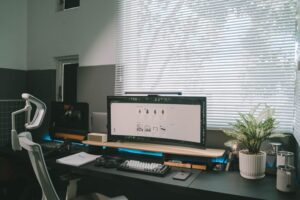
– Ergonomic Chair: A supportive chair with adjustable height and lumbar support can prevent back pain and keep you comfortable.
– Desk: Choose a desk size that fits your needs, whether it’s a compact workstation or a larger surface for spreading out.
– Footrest and Accessories: Consider a footrest, wrist supports, or monitor stands to maintain healthy posture.
Declutter and Organize
A clutter-free space helps create a peaceful environment. Here are some organization tips:
– Use drawer organizers or desk trays to keep small items in place.
– Store papers in labeled folders or filing cabinets.
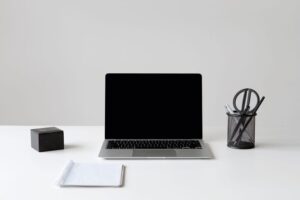
– Limit the number of items on your desk to essentials only.
– Cable management solutions can reduce the chaos of cords and wires.
Add Personal Touches Wisely
Personal items can make your space feel inviting but don’t overdo it. A few well-chosen decorations can boost your mood:
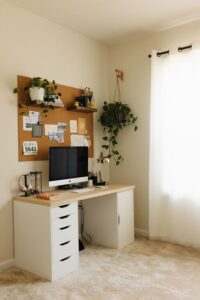
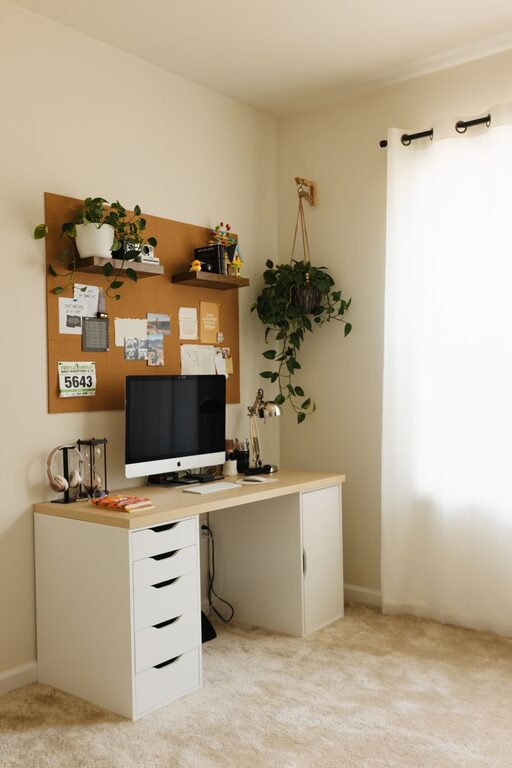
– Plants add color and improve air quality.
– Artwork or photos that inspire or relax you.
– A cozy throw or cushion for your chair.
Control Lighting
Good lighting is crucial for comfort and productivity.
– Maximize natural light during the day.
– Use adjustable desk lamps with warm light for evenings.
– Avoid harsh overhead lighting that creates glare or shadows.
Incorporate Calming Colors
Colors influence how you feel. Soft, muted tones often promote relaxation.
– Shades of blue, green, or beige.
– Avoid overly bright or distracting colors in your immediate workspace.
– If you prefer bolder colors, use them as accents rather than the main palette.
Manage Noise Levels
Background noise can be disruptive, so consider these options:
– Use noise-canceling headphones or white noise machines.
– Soft background music or nature sounds can improve focus.
– If possible, establish quiet hours with family or housemates.
Take Regular Breaks
Even in a relaxed setting, staying indoors and in front of a screen can drain energy.
– Follow the 20-20-20 rule: every 20 minutes, look at something 20 feet away for 20 seconds.
– Stand up and stretch regularly.
– Step outside briefly for fresh air or a short walk.
Optimize Technology Setup
Technology should support your work, not cause frustration.
– Ensure your internet connection is reliable.
– Keep cables organized to avoid clutter.
– Use wireless devices where possible to reduce cords.
– Position your screen at eye level to avoid neck strain.
Keep Air Quality Fresh
Good air quality is often overlooked but important.
– Open windows when weather permits for ventilation.
– Use an air purifier or humidity monitor.
– Include a few houseplants known for improving indoor air.
Establish Boundaries
To truly relax in your home office, set clear work-life boundaries.
– Define work hours and communicate them with others at home.
– Avoid using your office space for non-work activities.
– At the end of the day, shut down your computer and step away.
—
By combining these tips, you can create a home office that feels like a calm retreat rather than a source of stress. A relaxing workspace enhances well-being and helps you stay focused and motivated throughout the day. Start with small changes and adapt your setup as you discover what works best for your comfort and productivity.